Pay & shift solution
Product design
UX design
Certain details have been removed or blurred to respect NDAs

Summary
Goal
The goal of this project was to design a scalable payroll and shift management system capable of supporting complex staffing requirements across multi-jurisdictional compliance. Recruiters needed a flexible way to define pay rates across a range of factors, manage complex shift combinations, and ensure compliance with labour legislation. The challenge was to translate these highly complex rules into an intuitive product experience.
My role
I was the sole product designer of the system, from initial research and problem framing through to UX architecture and interface design. This involved conducting recruiter research, synthesising insights into scalable solutions, and designing the interaction model and logic. I worked closely with engineers, external partners and key stakeholders to iterate on the solution and ensure it could support a wide range of staffing scenarios.
Outcome
The resulting system has successfully replaced inefficient and expensive manual workflows with a flexible solution that recruiters now use to automate pay and shift management at scale.
A complex staffing problem
Supporting a new opportunity
Following an acquisition, we were presented with the challenge of creating a system that allowed companies to define different pay rates depending on various factors.
A much larger market gap
While investigating the problem further, competitor research revealed that the majority of temporary staffing operations were still being managed through manual processes such as spreadsheets. This created a significant opportunity to design a system that could automate and scale these workflows.
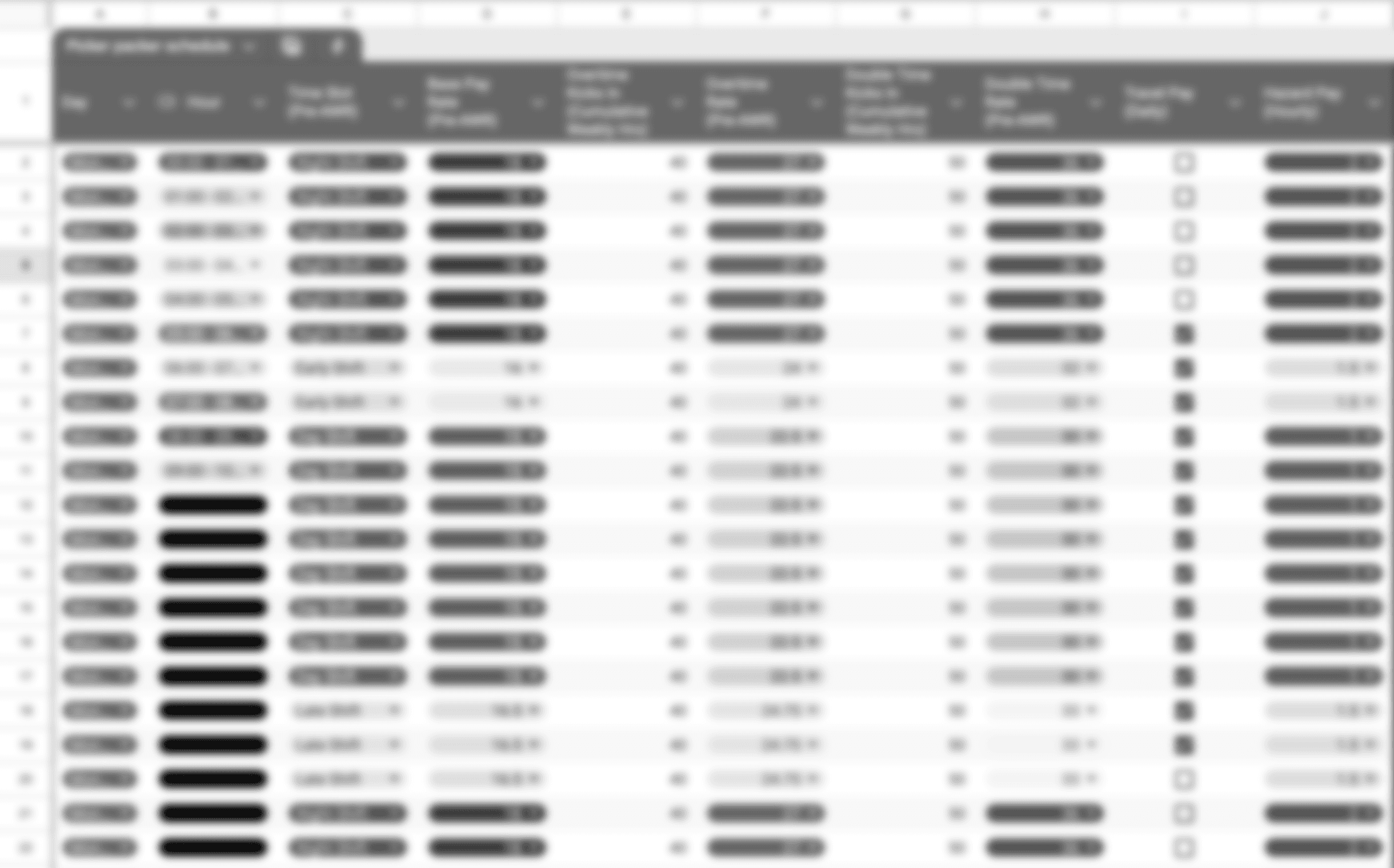
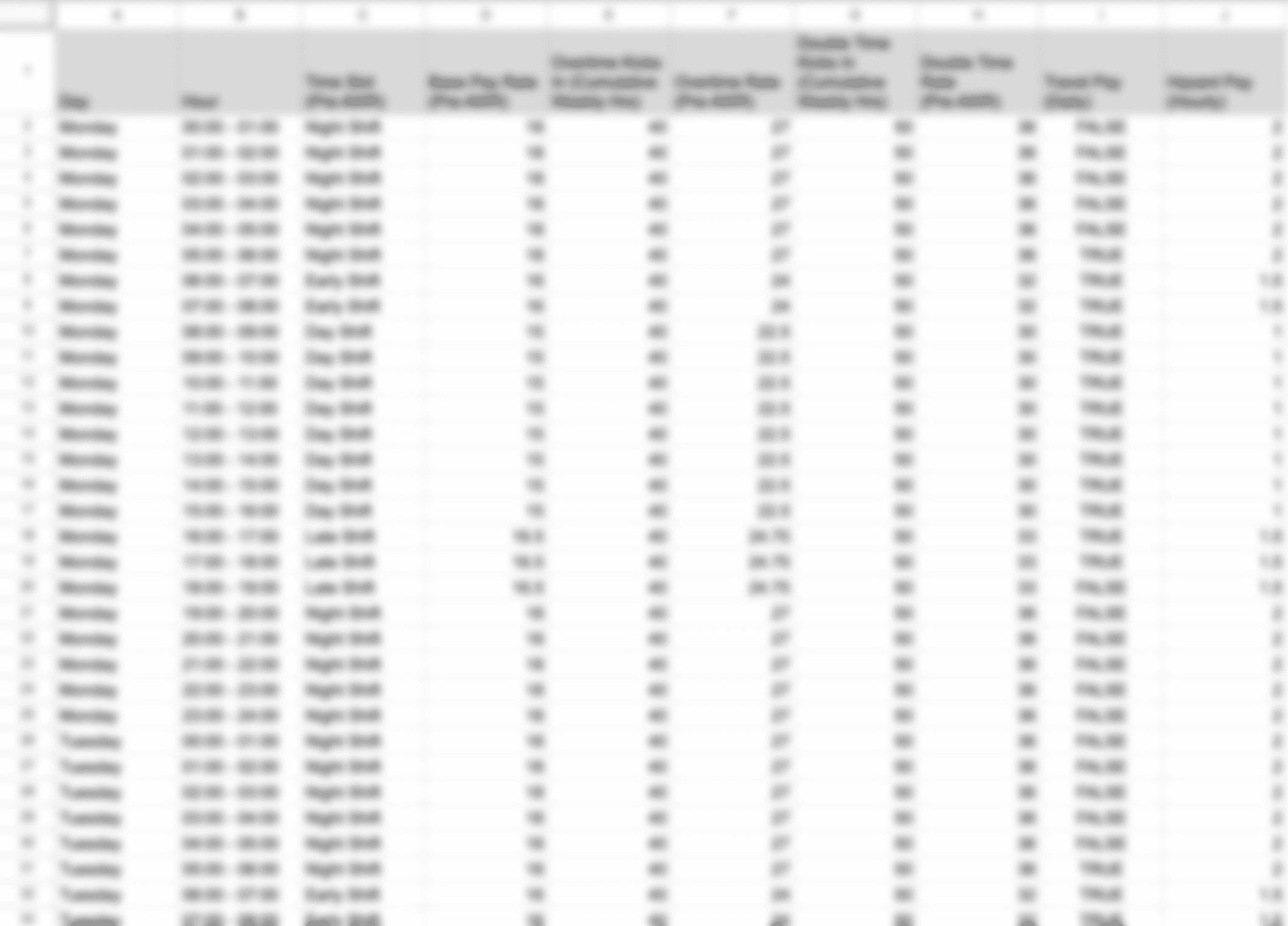
Spreadsheet layouts used by recruiters before our solution (blurred to respect NDA's)
Researching real workflows
Recruiter interviews and user testing
I conducted user research with recruiters across different countries to understand how they currently managed pay and staffing logistics.
Synthesising insights
Research findings were translated into a set of core design requirements to guide the development of a scalable and flexible system.



Affinity diagram results of research (blurred to respect NDA's)
What recruiters needed
Flexible pay configuration
Recruiters needed the ability to flexibly define pay rates that varied depending on differing factors.
Visual clarity
Users required simple visual representations of the system in order to manage large staffing operations efficiently.
Scalable automation
Recruiters needed reusable systems, automation, and rule-based logic to avoid manually rebuilding requirements for every job.
Solving a highly layered problem
UX flow iterations
The feature went through multiple UX flow revisions as new edge cases and operational requirements were identified through meetings with users and stakeholders.
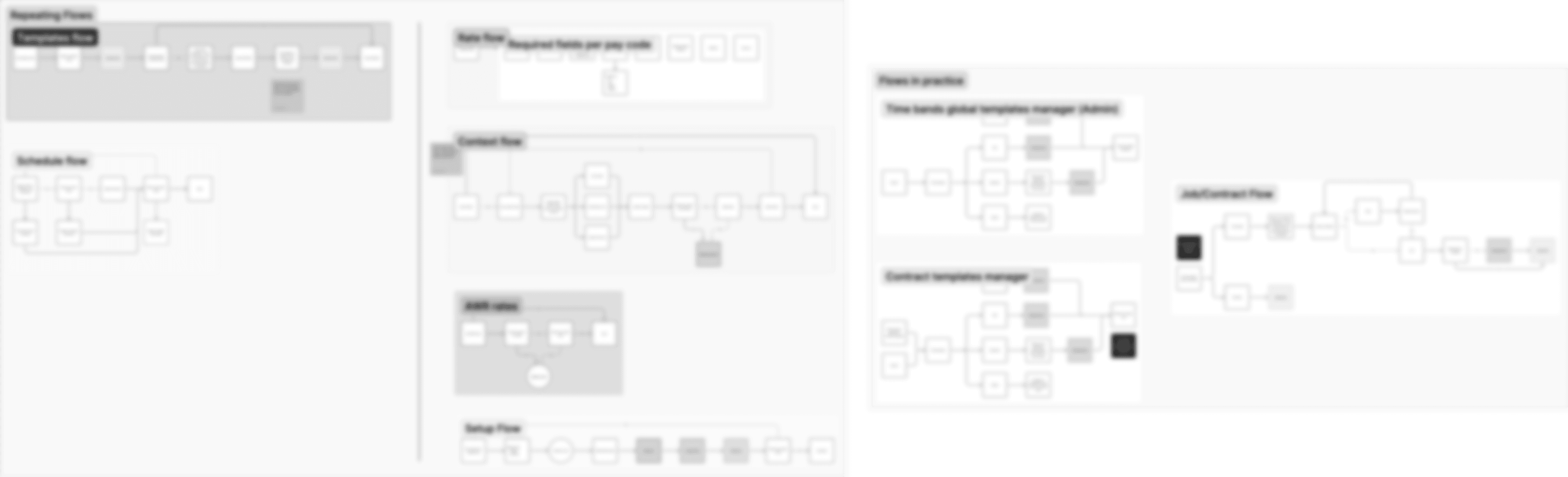
UX flows (blurred to respect NDA's)
Rapid prototyping
Due to the complexity of the logic being built, I used rapid prototyping alongside AI-assisted tools for mock generation to quickly test and iterate on different interaction models and gather feedback with stakeholders and engineers.
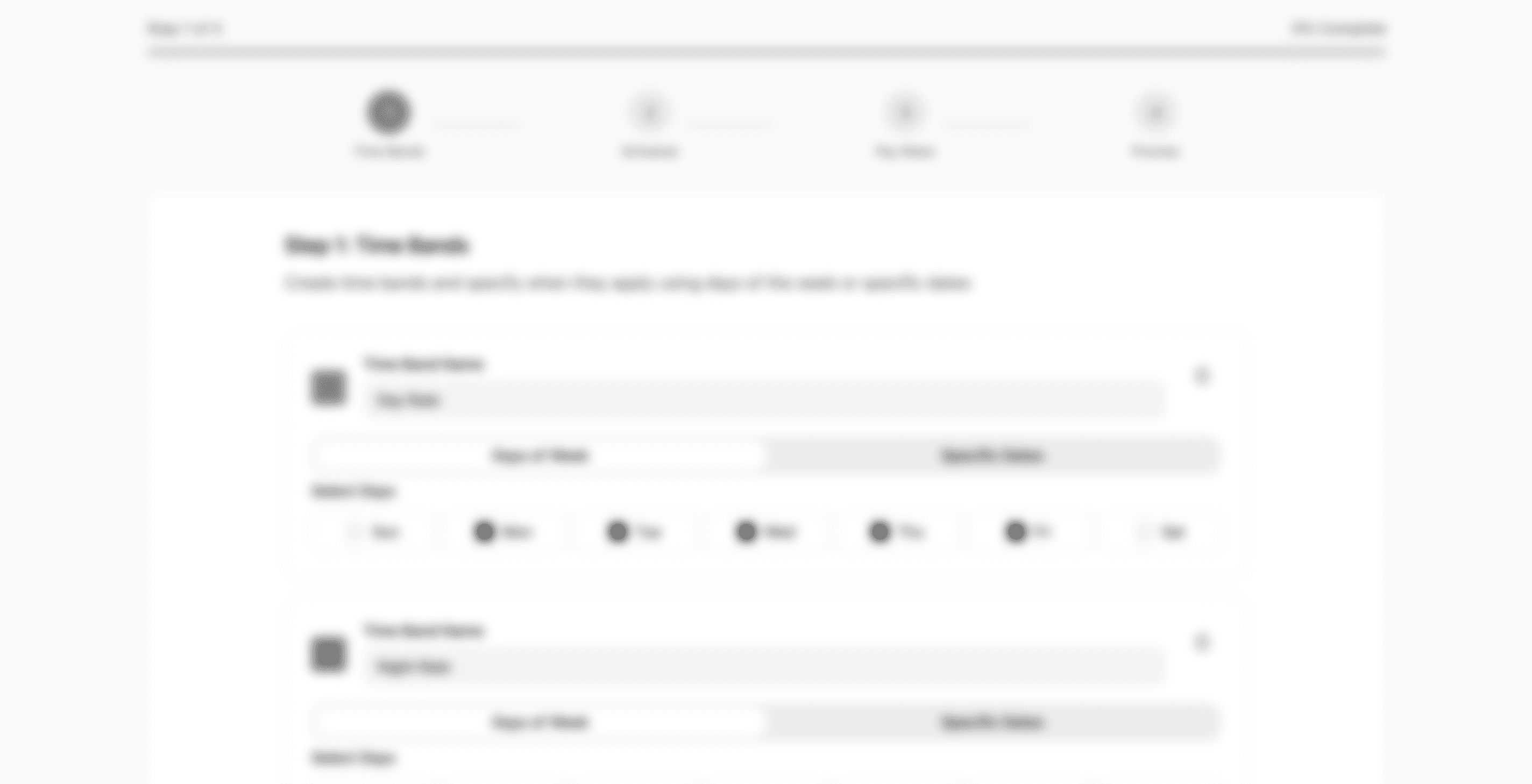
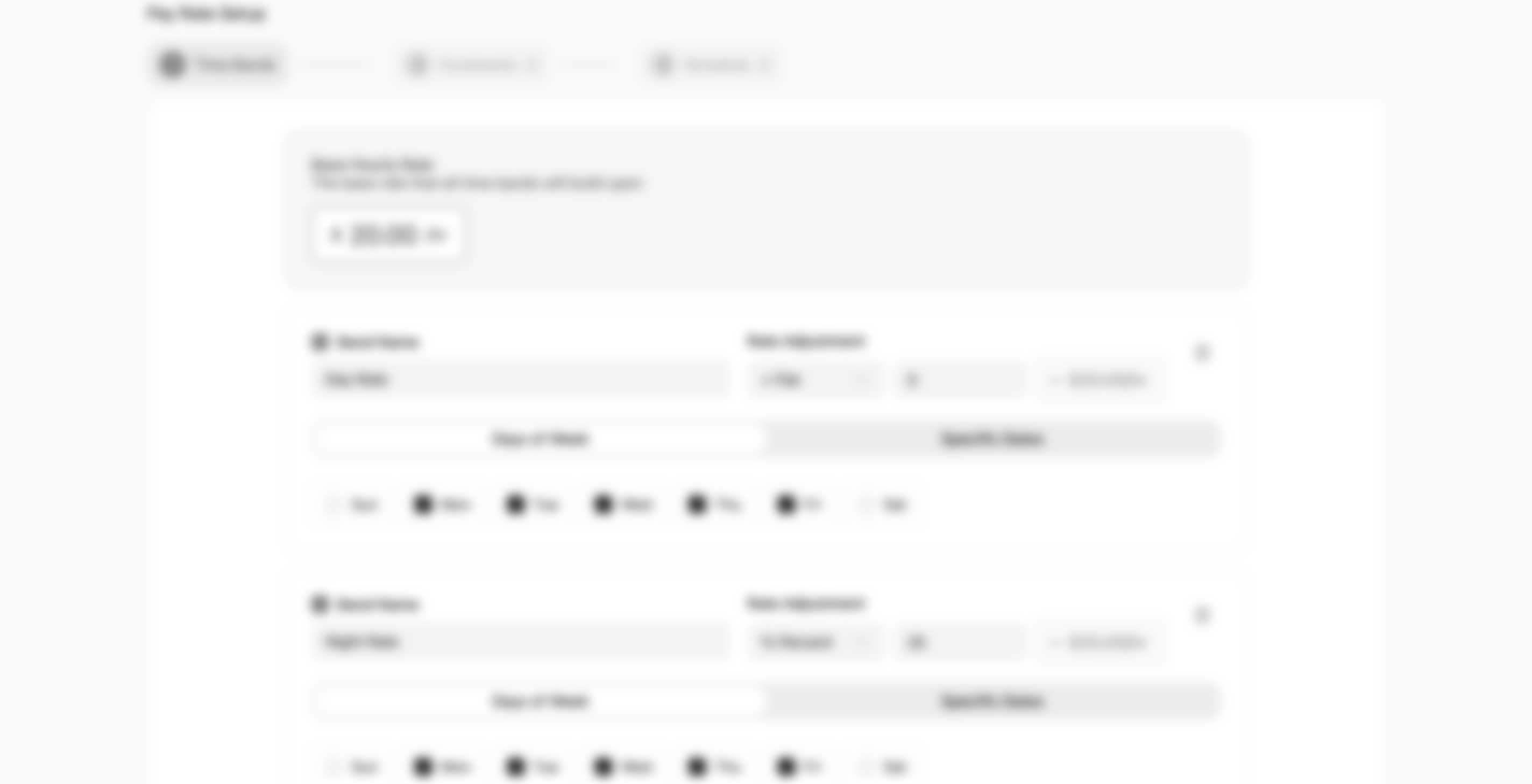

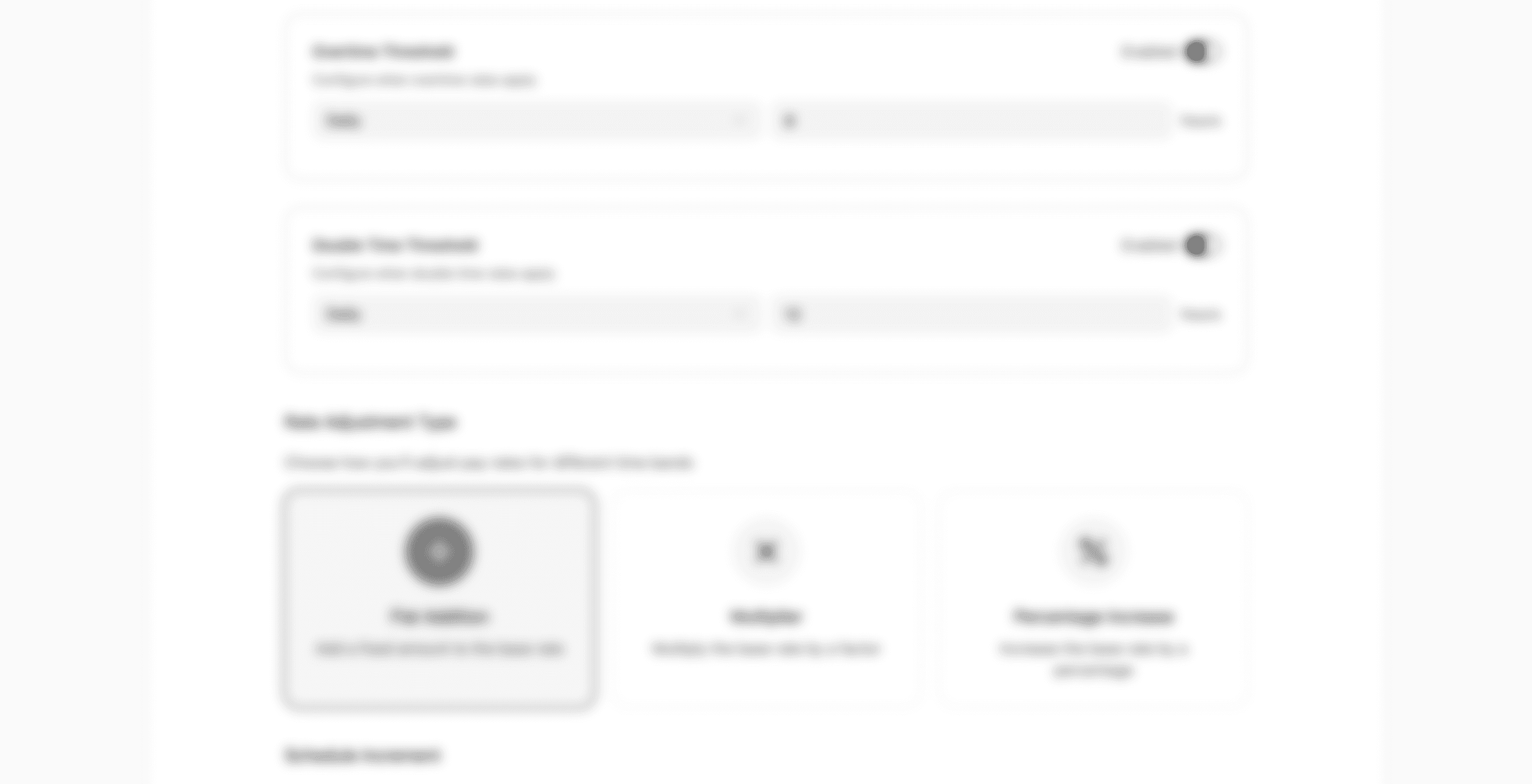


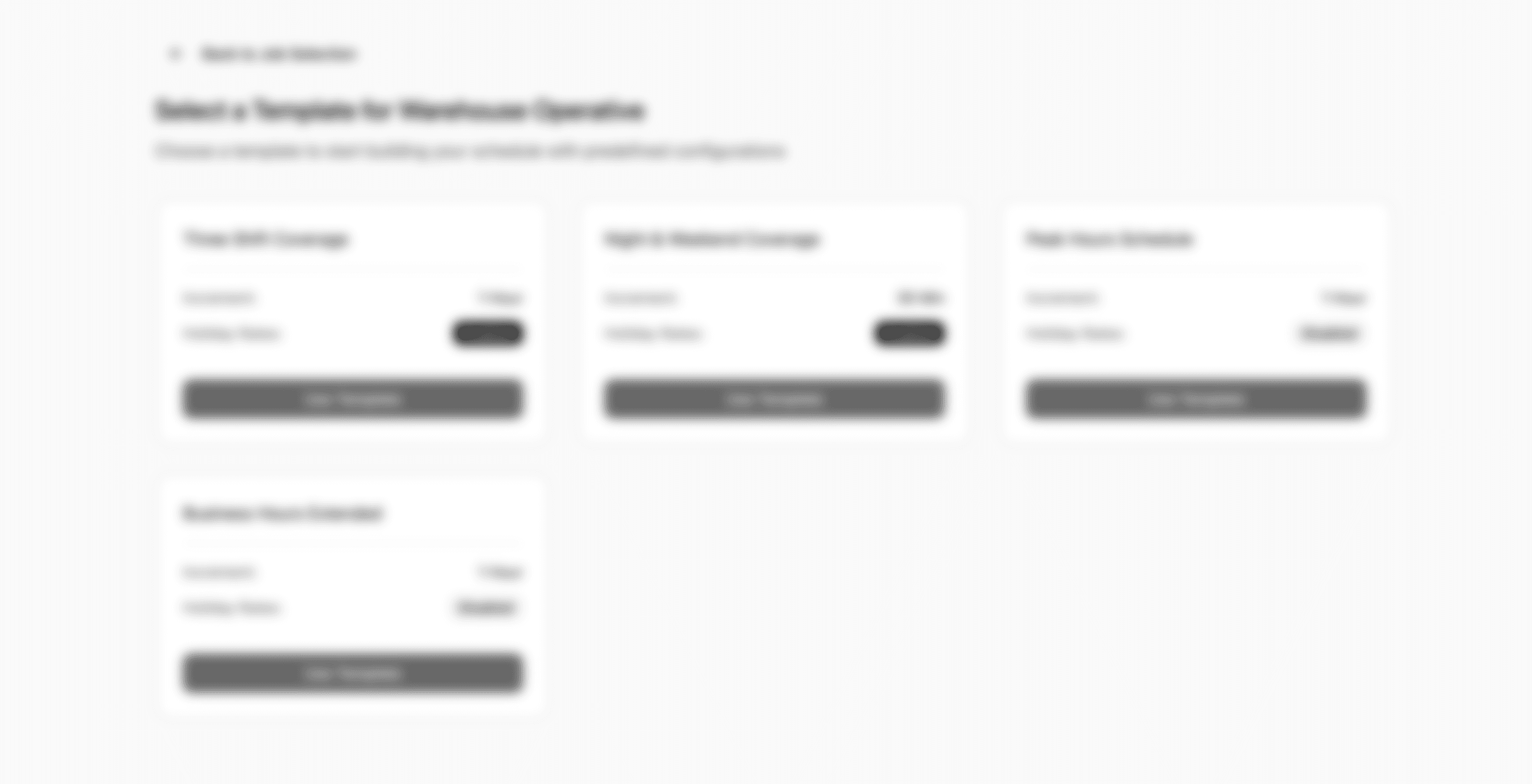

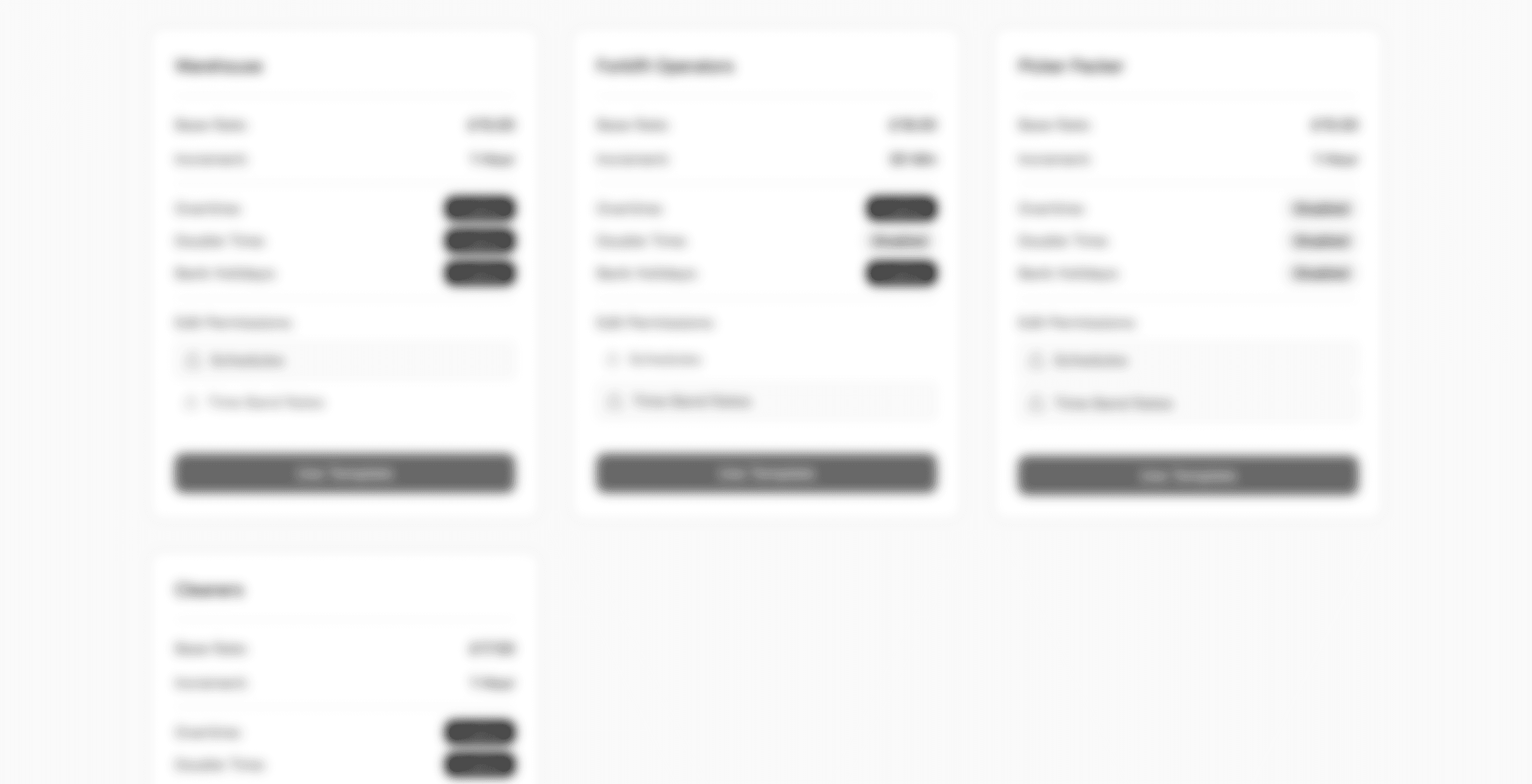

Early prototypes (blurred to respect NDA's)
Building the foundation
Dynamic rate attribution
I designed a scalable system that allows recruiters to allocate pay rates with variable factors that are completely customisable.
System overrides
The system also supports overrides for further variance on base customisations. In testing with recruiters this was very well received to help automate workflows for repetitive tasks
Compliance and transparency
To reduce legal risk and pay disputes, the system ensures all pay rates are clearly defined and visible to both recruiters and workers.
Designing the shift manager
Beyond regular shift formats
During testing we discovered that many recruiters required shift formats that differed from traditional methods.
Flexible shift allocation
The shift manager was designed to allow recruiters to create custom shift cycles or other irregular combinations for greater customisation and recruiter control.
Managing shift details
Recruiters have a vast range of configuration tools for operational details within the same system further improving our all in one solution for recruiters.
Transforming temporary staffing workflows
Eliminating spreadsheet dependency
Recruiters can now manage complex pay and shift configurations directly within the product.
Improving worker trust
Transparent pay and shift information ensures workers clearly understand what they will be paid and reduces legal risk.
Increasing product adoption
The new system has contributed to increased product adoption among recruiters seeking more efficient staffing solutions.