Job matching AI
Product design
UX design
UI design
Certain details have been removed or blurred to respect NDAs
Summary
Goal
The goal of this project was to design and implement an AI powered job matching assistant that helps candidates more effectively find and secure relevant work opportunities. Rather than acting as a traditional chatbot, the aim was to create a proactive recruiting assistant that integrates naturally into the job search experience and works for the user. The system was designed to guide users toward better matches while maintaining transparency and user control.
My role
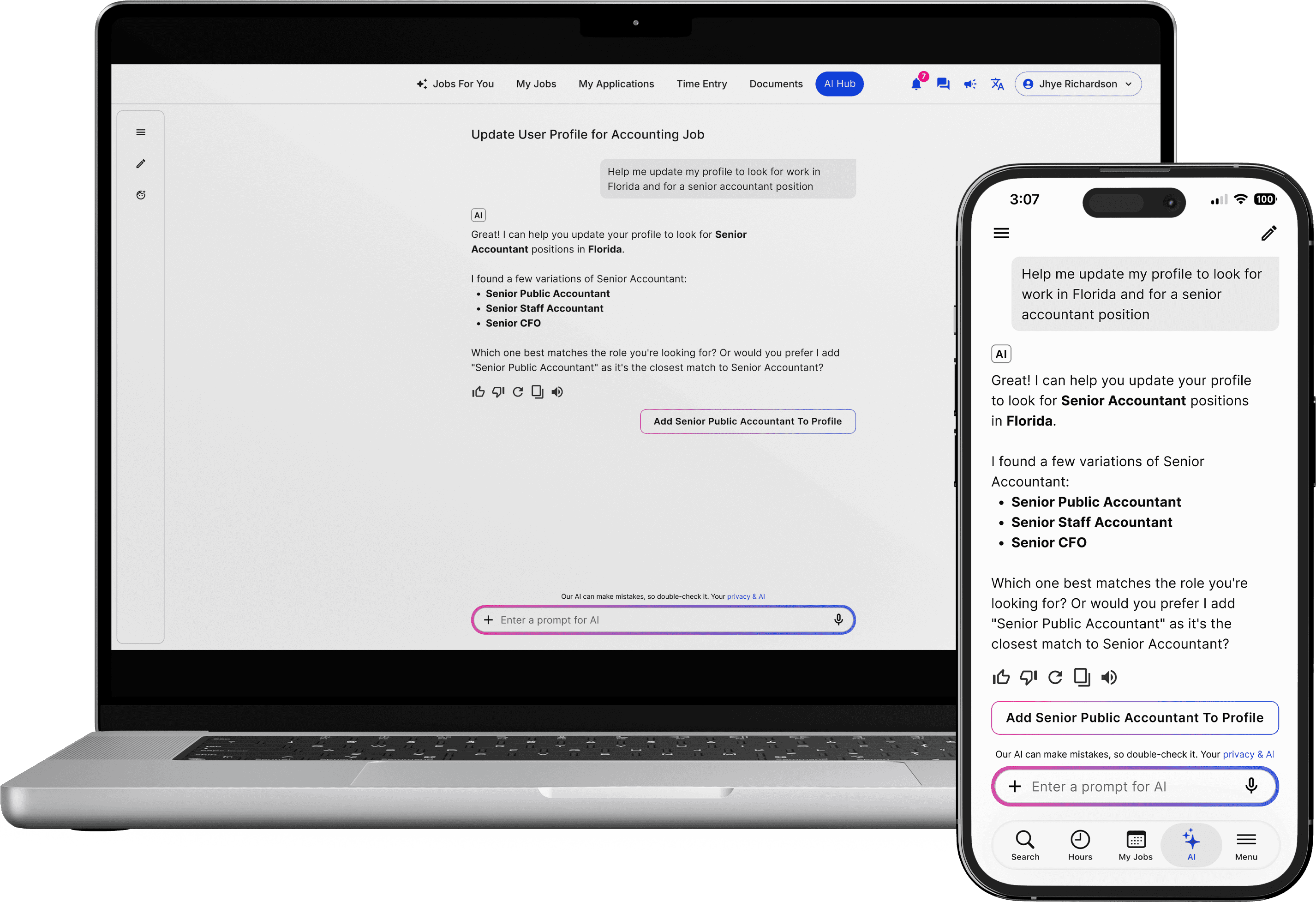
I served as the lead designer for the AI experience, responsible for defining the UX strategy, interaction model, and interface design. This involved conducting competitor research, running user testing sessions, synthesising insights into actionable design principles, and collaborating closely with the in-house AI engineering team. I designed the conversational flows, UI system, and interaction points that allow the AI to assist users throughout their journey.
Outcome
The AI assistant has significantly increased the valuation of the product offering and has helped a vast number of users identify suitable job opportunities while significantly improving accessibility, engagement, and adoption across the platform.
Rethinking AI for job search
Moving beyond traditional job boards
Many existing job platforms rely on static search filters and manual browsing, which can make it difficult for candidates to identify suitable opportunities. As AI capabilities matured, there was an opportunity to create a more intelligent job discovery experience.
Identifying gaps in competitor AI solutions
I began by researching competitor platforms and analysing public user feedback to understand how AI was currently being used in job search products. Many solutions functioned primarily as simple chatbots and often lacked contextual awareness or meaningful assistance.
Competitor research (blurred to respect NDA's)
Understanding how users want AI to help
User testing across diverse demographics
To better understand expectations around AI in job search, I conducted user testing sessions with participants across a range of demographics and experience levels. The goal was to explore how people naturally interacted with AI tools during their job search.
Synthesising research insights
Session transcripts and notes were analysed and grouped into an affinity diagram to identify recurring themes and user expectations for an AI assistant.
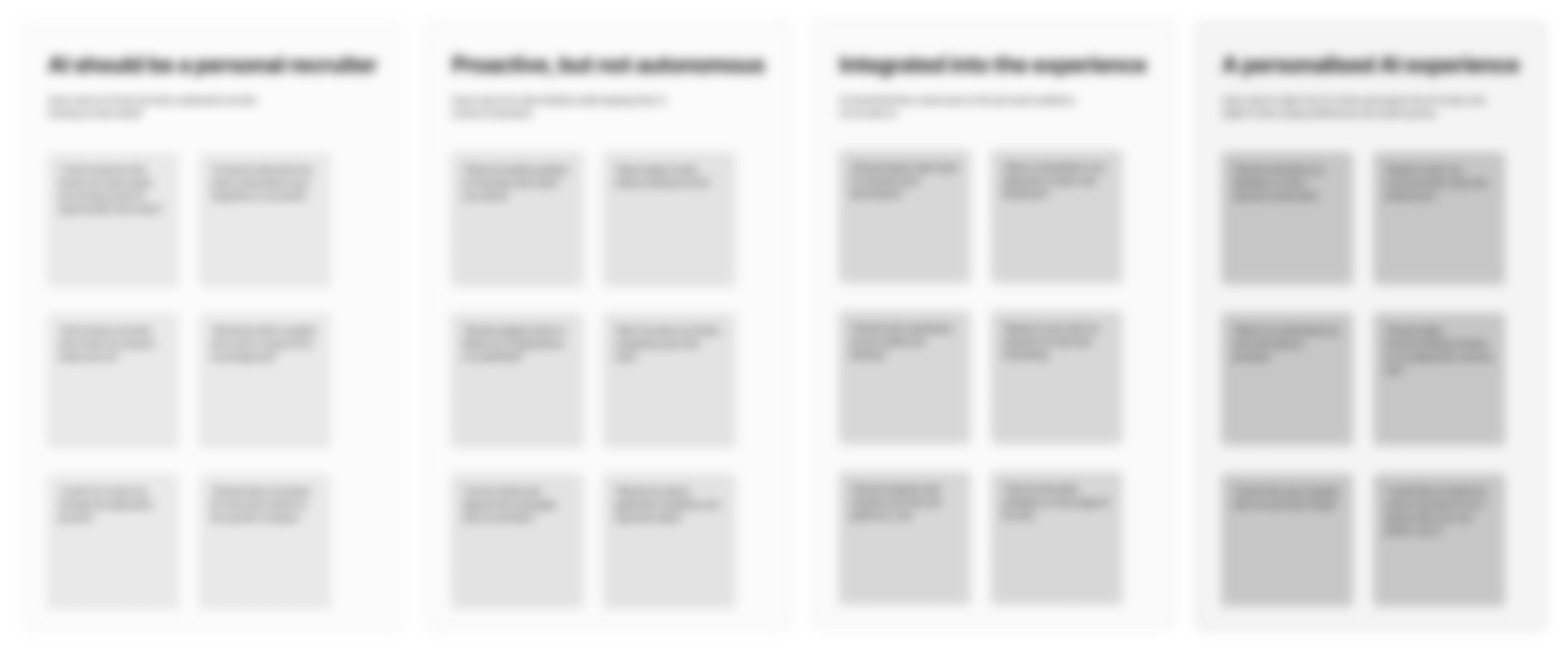
User research results (blurred to respect NDA's)
Principles for our AI assistant
AI should be a personal recruiter
Users responded most positively when the AI behaved like a knowledgeable assistant helping them navigate the job market.
Proactive, but not autonomous
Users wanted AI to suggest opportunities and guide them toward actions, but they were uncomfortable with the system performing tasks without confirmation.
Integrated into the experience
Participants preferred AI that appeared naturally throughout their journey rather than existing as a standalone chatbot.
A personalised AI experience
Users expected AI to adapt to their preferences and feel personalised both in conversation and presentation.
Designing the interaction model
Close collaboration with the AI team
I worked closely with the internal AI engineering team to understand the technical capabilities and constraints of the system.
Mapping the AI and user journey
I mapped UX flows showing how users could move from an initial conversation with the AI to their ultimate goal of identifying and applying for the right job.
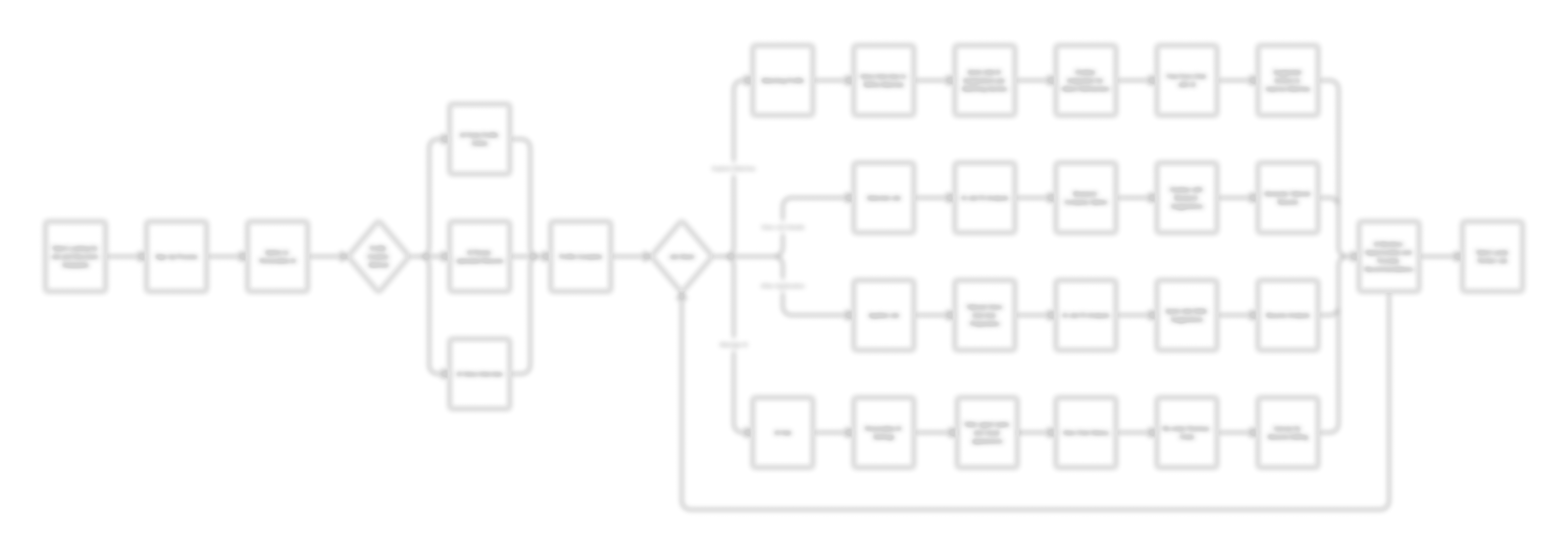
UX flows (blurred to respect NDA's)
Structuring AI responses
The AI team and I collaborated to refine how AI responses were formatted, focusing on clear information hierarchy and conversational laddering that helps users move toward their goal efficiently.
Building the AI
Iterative UI exploration
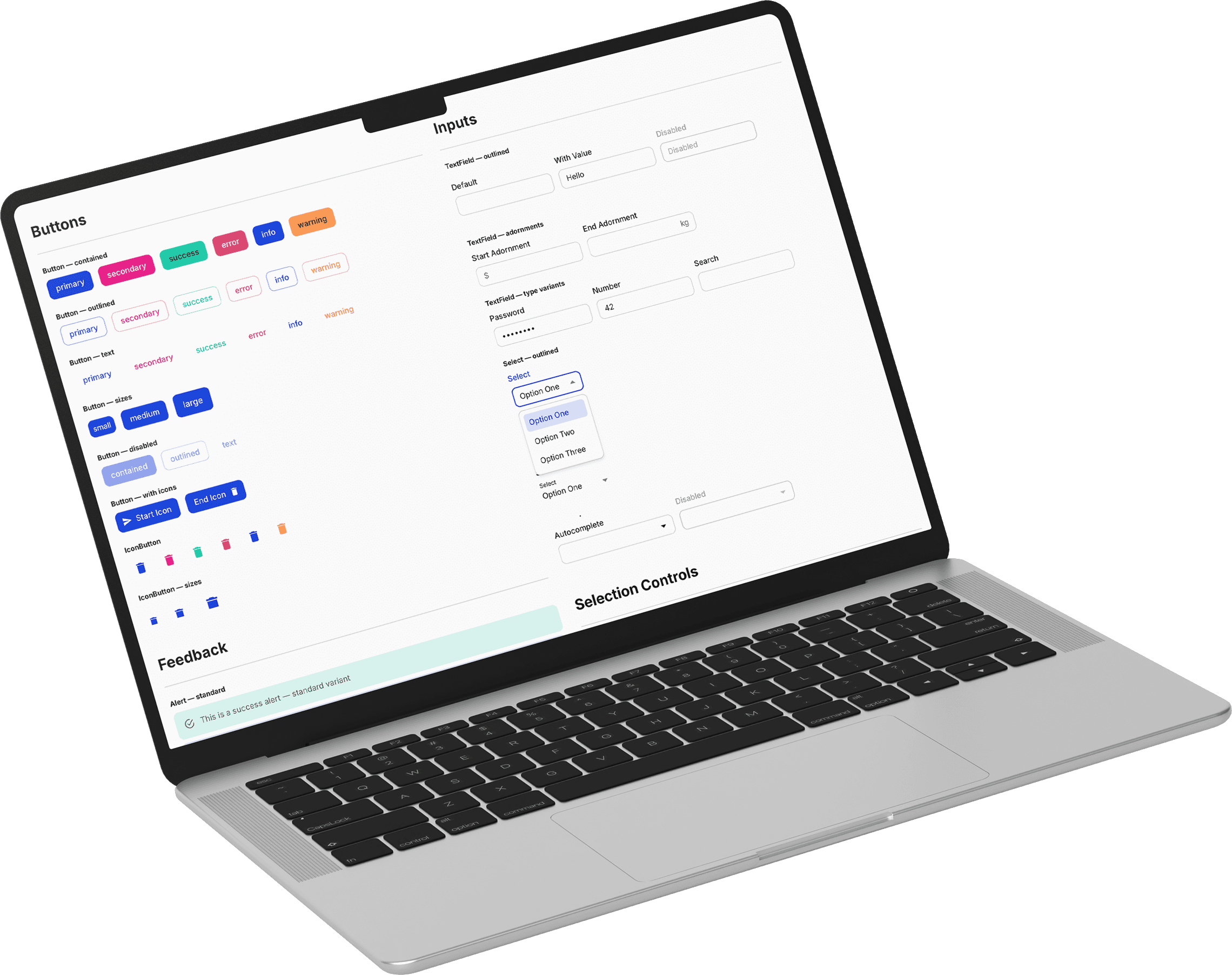
The interface went through multiple rounds of design iteration and prototyping to balance clarity, accessibility, and conversational usability.
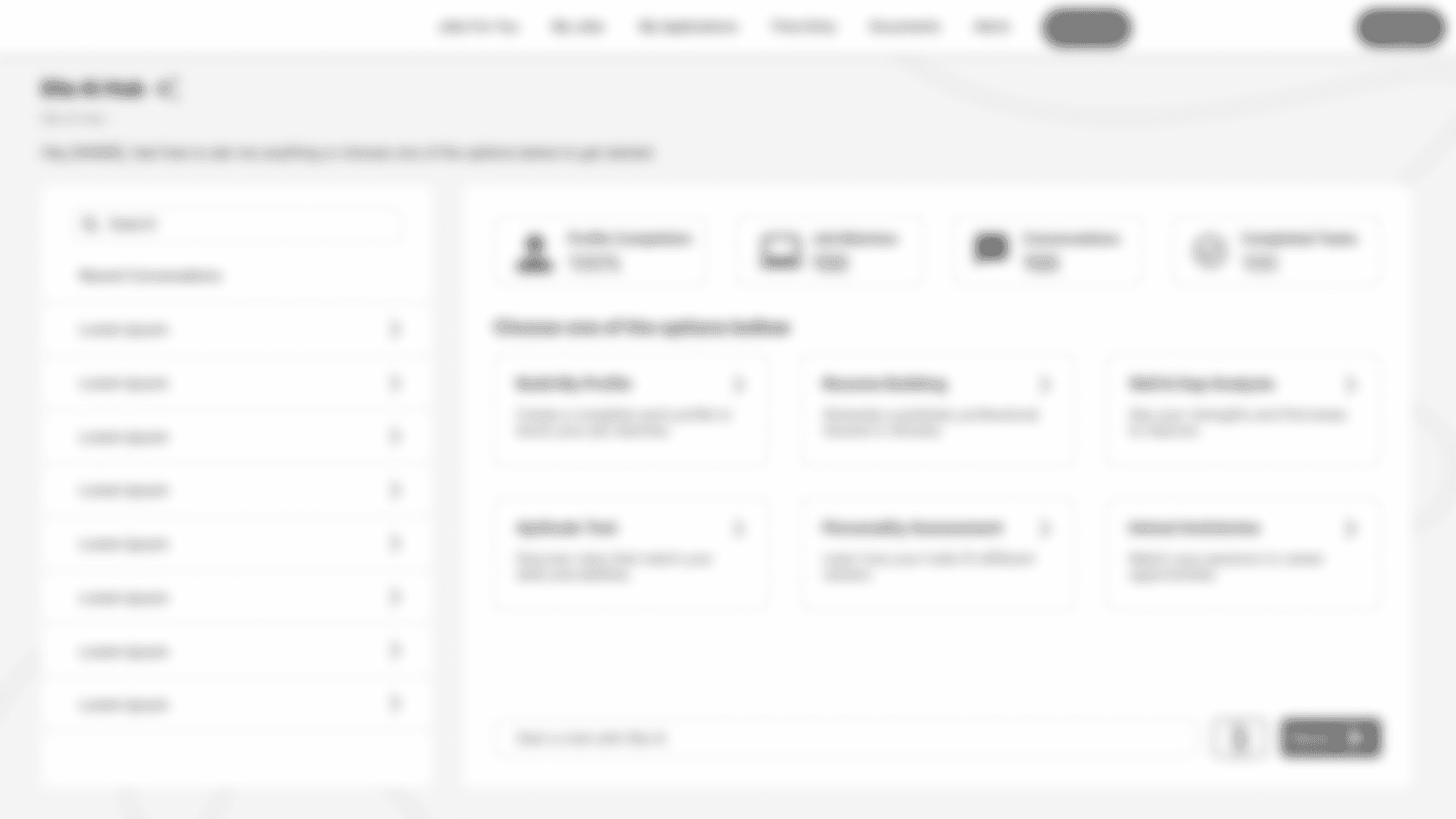
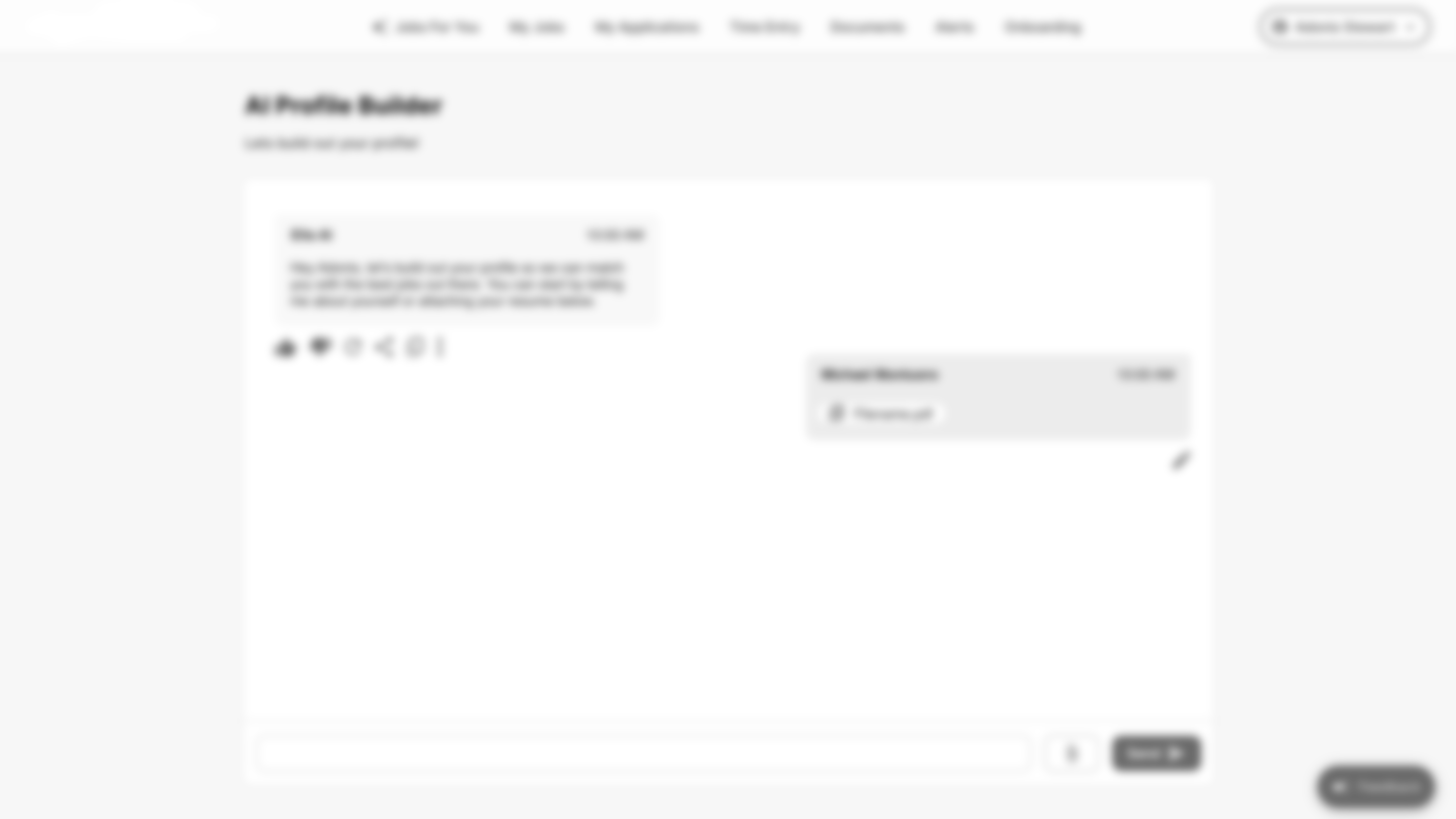
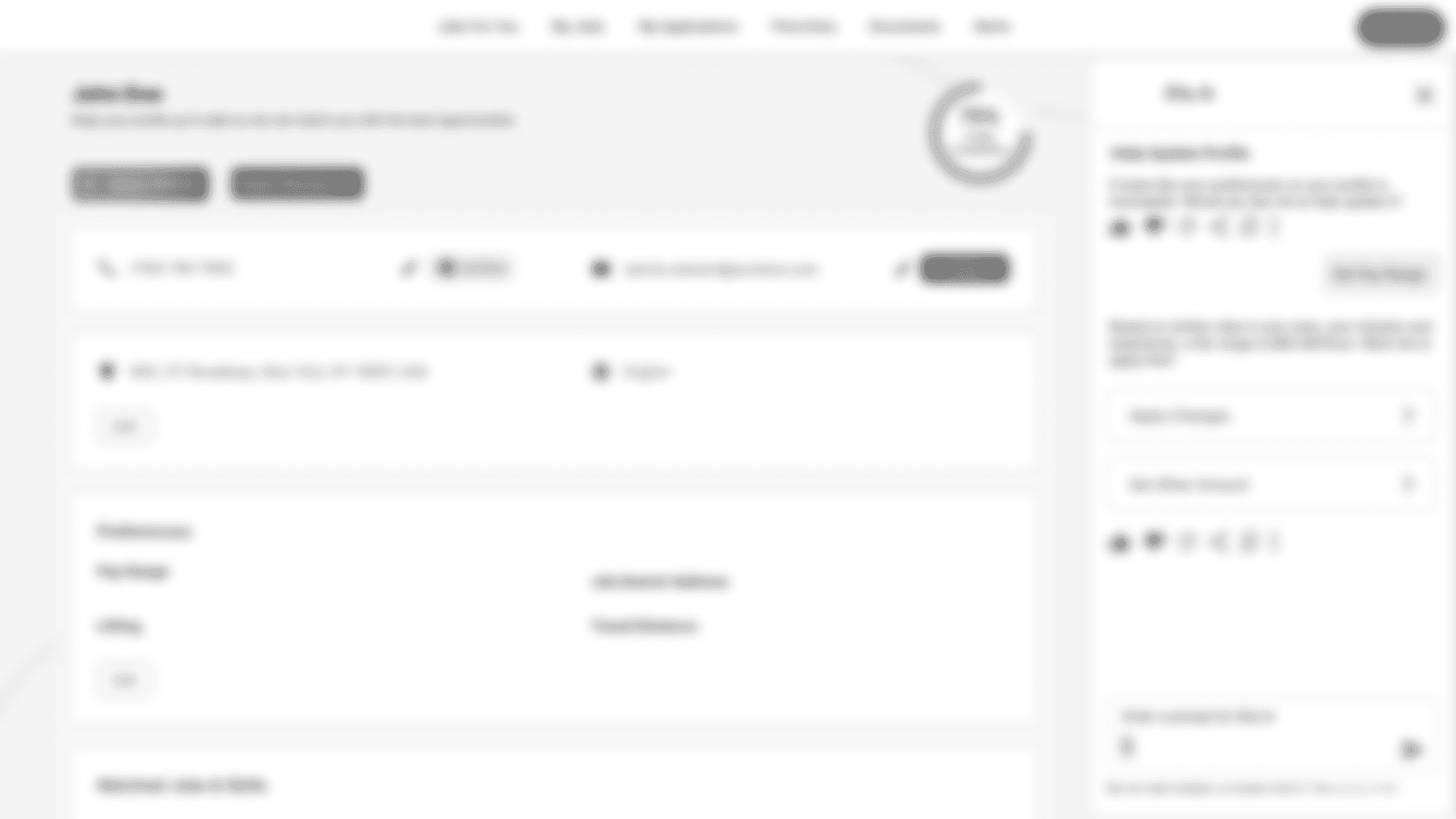
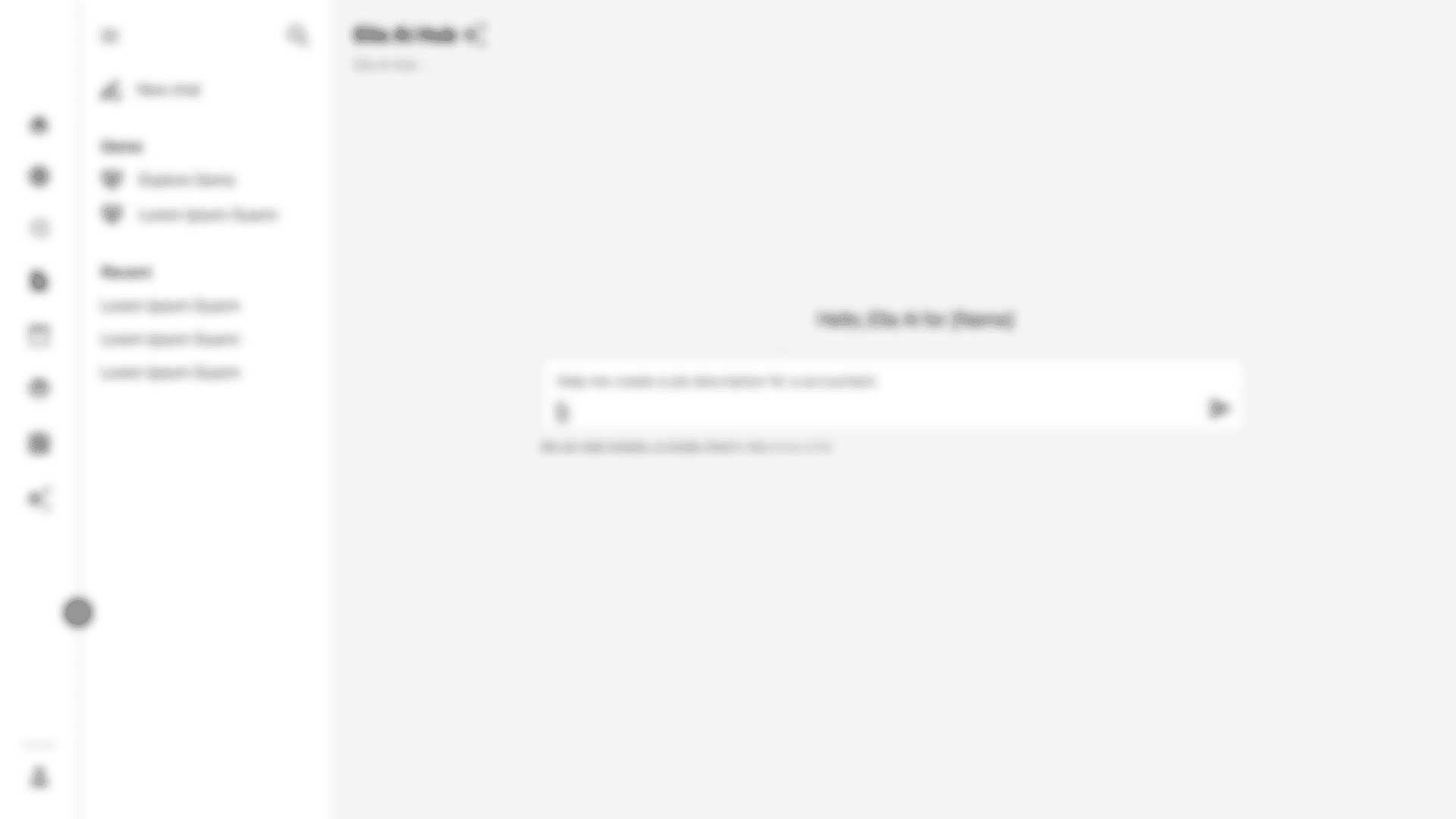
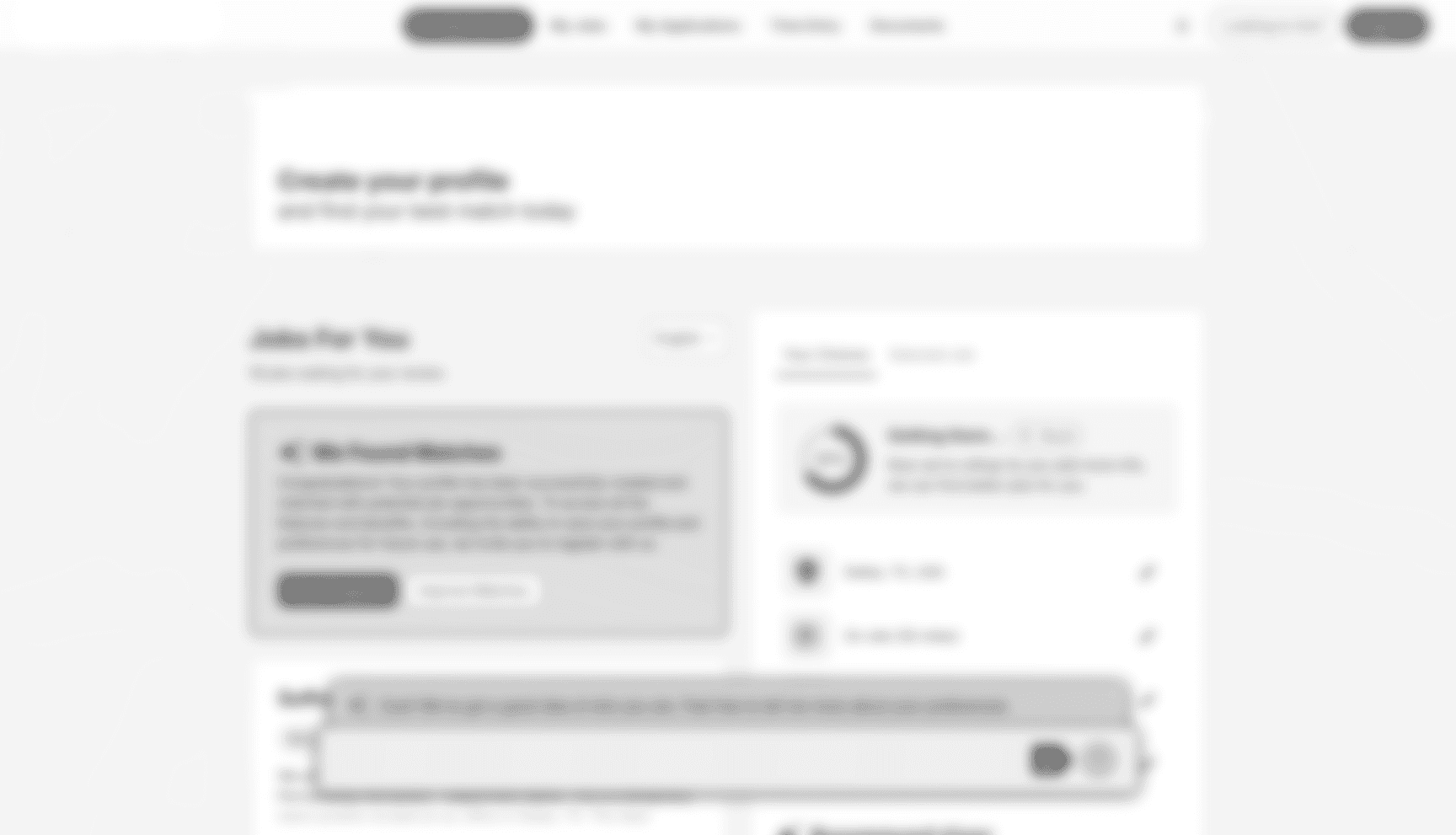
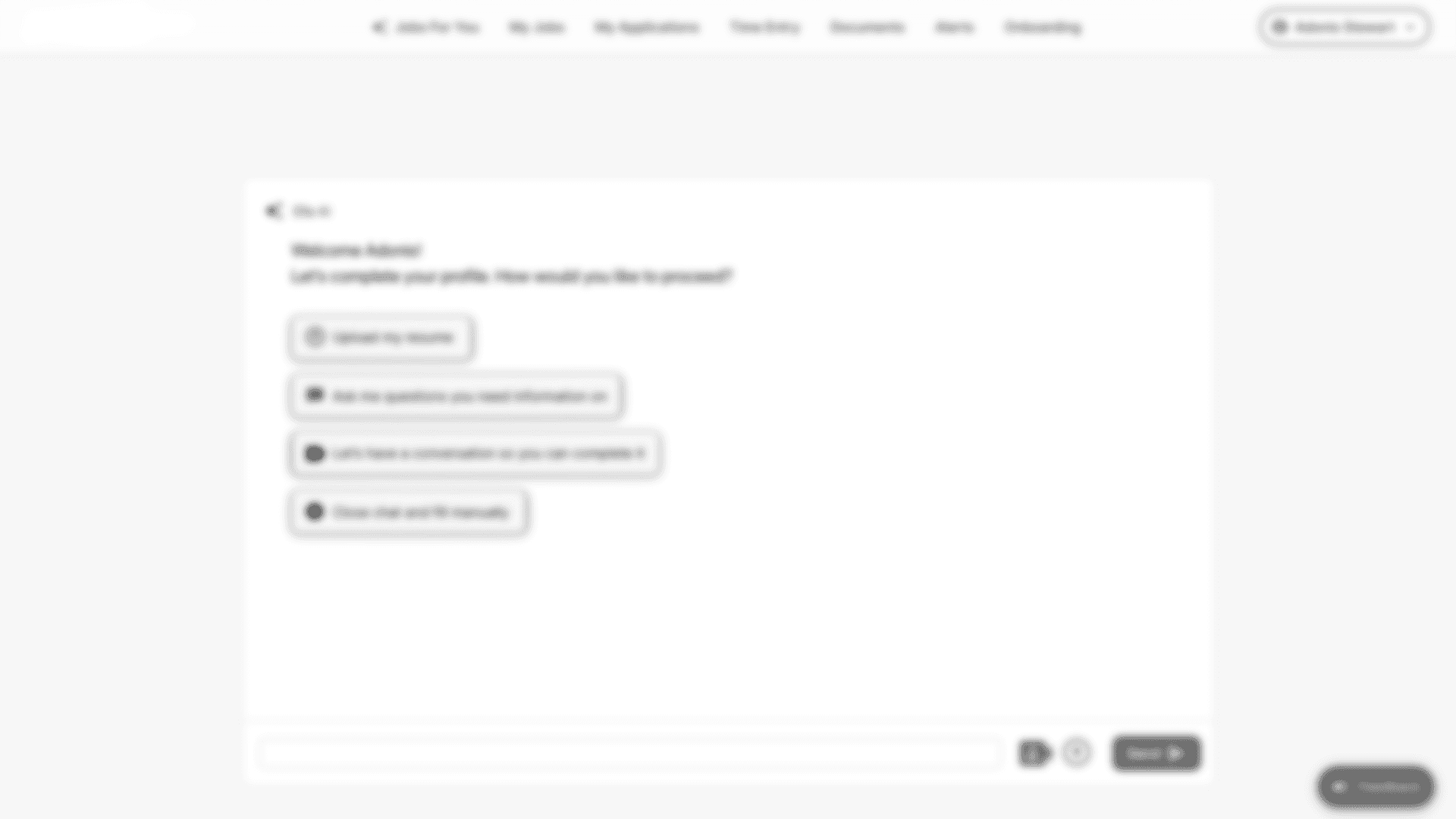
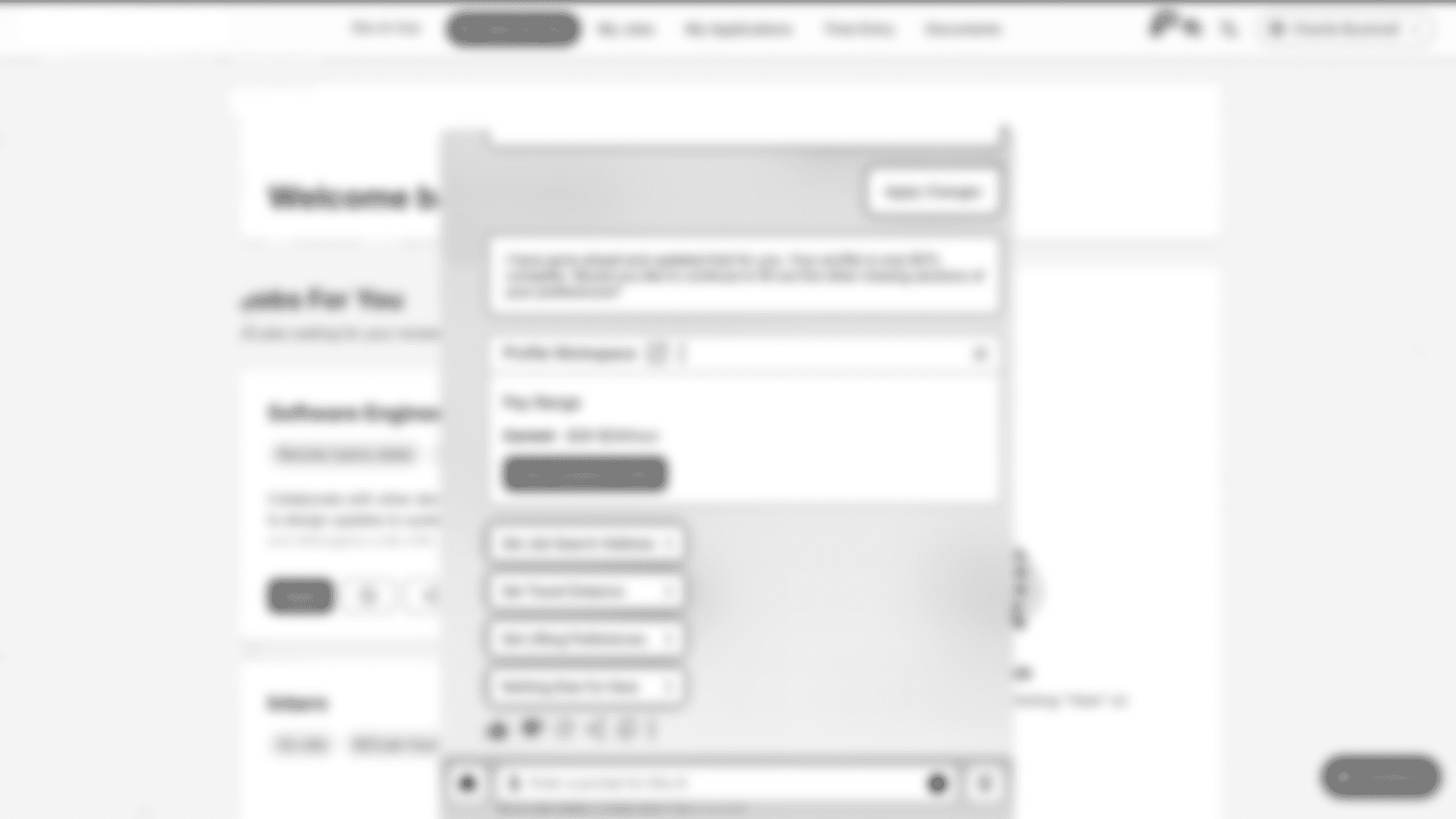
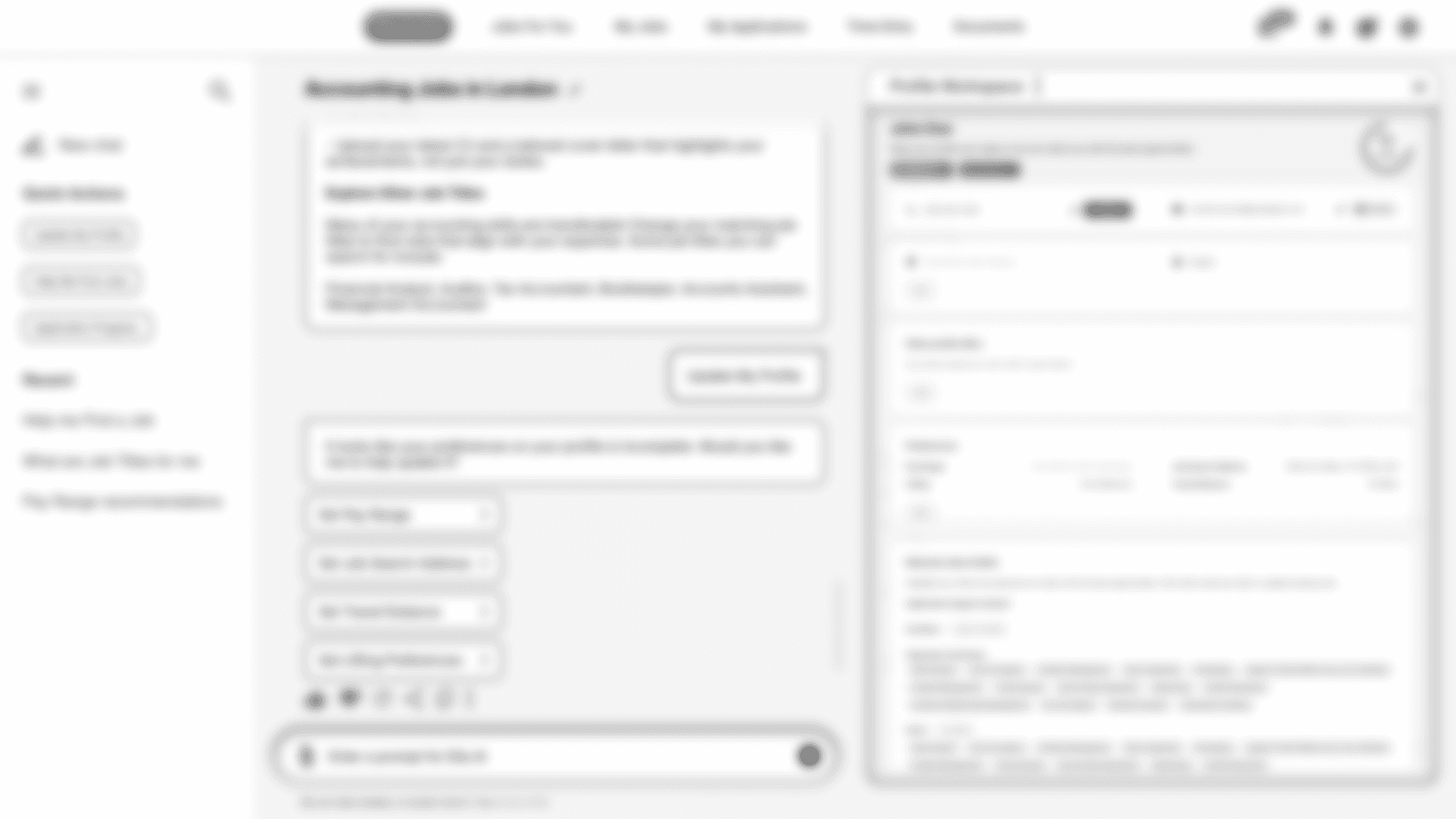
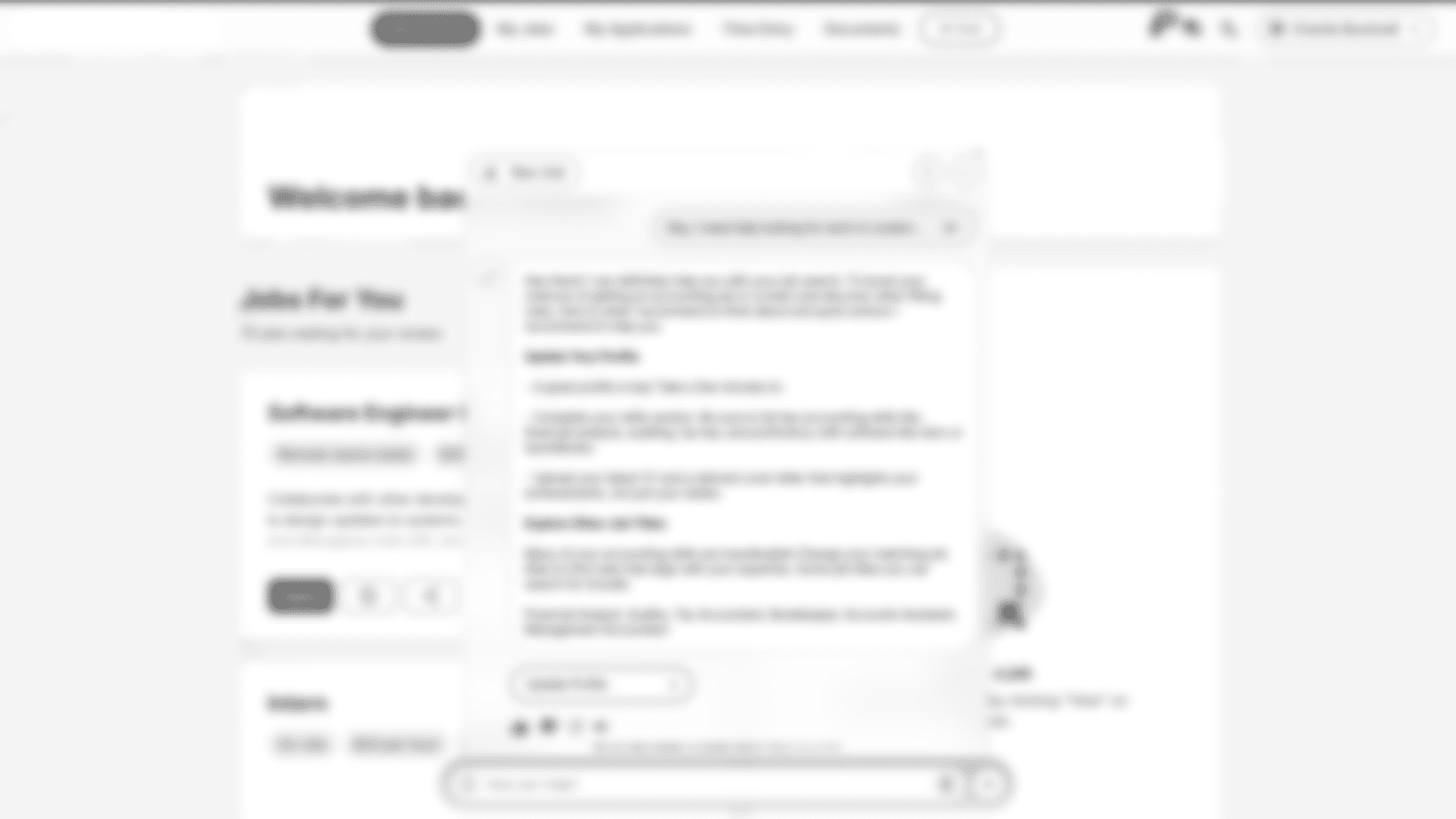
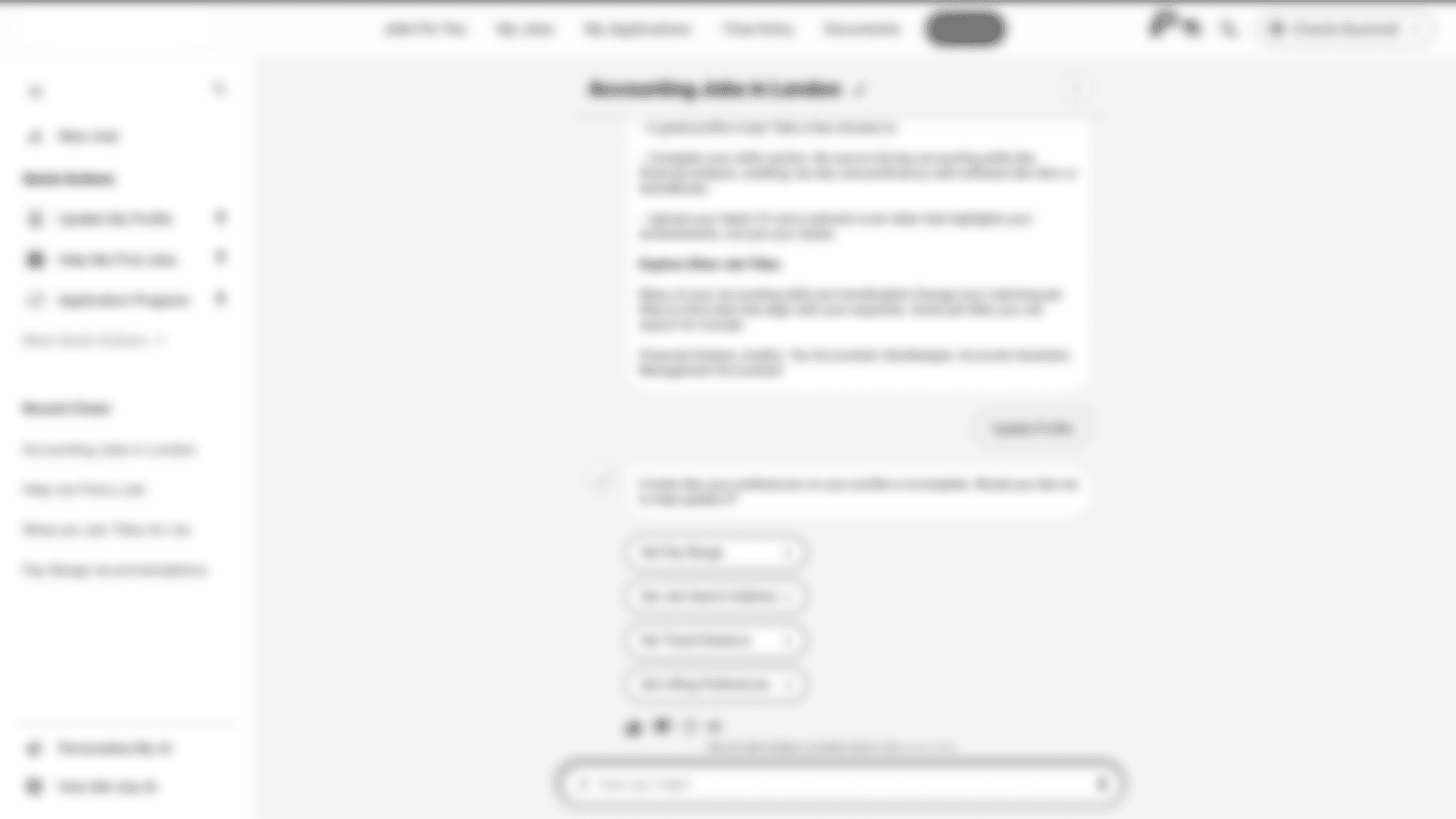
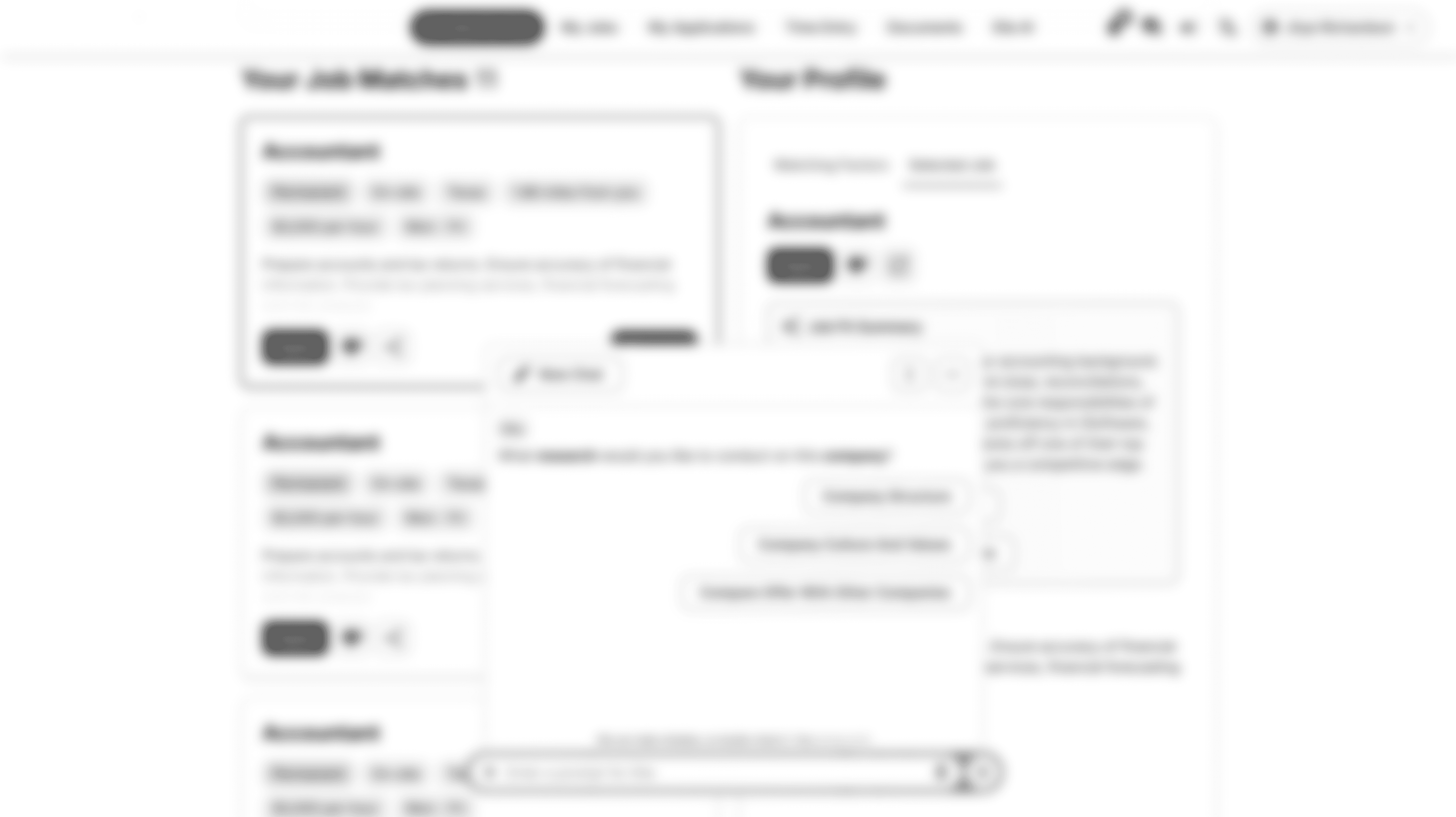
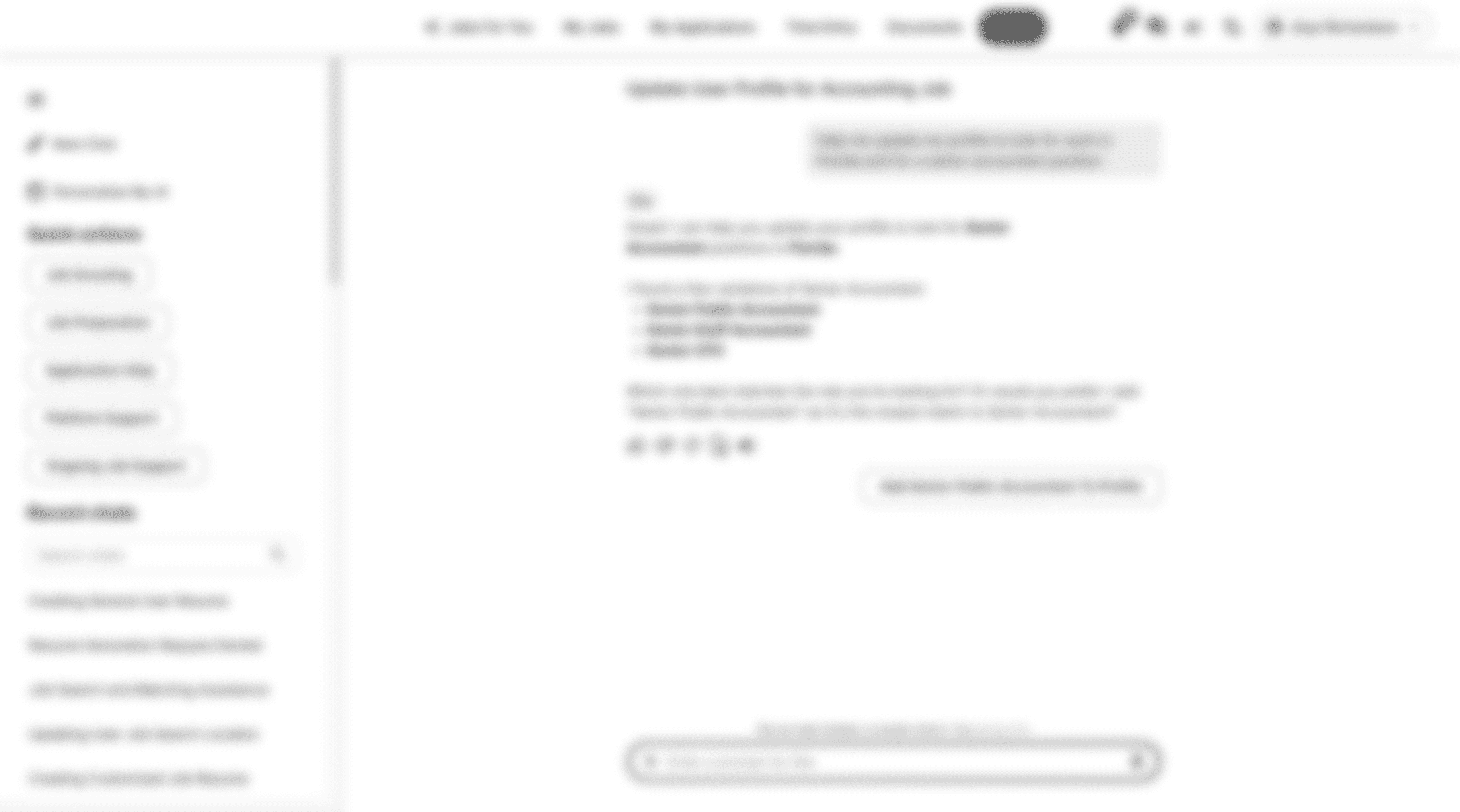
UI iterations (blurred to respect NDA's)
Contextual entry points
Rather than relying solely on a chat interface, I introduced contextual entry points throughout the product where the assistant could offer actions for the AI to carry out.
Accessible interaction methods
To ensure the AI could support a broad range of users, the interface was designed to support text, voice, and multilingual interaction.
Personalisation options
Users are given the ability to personalise aspects of the AI interaction, including conversation style and visual presentation to suit their own wants and needs.
Improving the job search experience
Helping candidates find better matches
The AI assistant has helped a significant portion of users identify more relevant job opportunities through conversational job discovery and recommended actions.
Removing language barriers
Multilingual capabilities through our AI has enabled users to create job profiles and search for work in their preferred language.
Strengthening the product offering
The AI initiative has helped position the platform competitively against traditional job boards by offering a more intelligent and personalised job search experience and has opened up new opportunities for us to explore further.